Monday, June 27, 2016

Robert Smalls: Former Slave Turned Congressman

Robert Smalls

Robert Smalls was one of the most influential African-American men to fight for freedom during the Civil War. He was born a slave and died as something of a national hero. His bravery and intelligence put him in the position to prove that not only were African-Americans capable of fighting for their own freedom, but that they were the equals of any white man who did the same.

Robert Smalls was born in South Carolina on April 5, 1839, in the back yard of the home where his mother was kept as a slave. Because his mother was a slave, he was born into slavery, even though he was the son of a white man. Who that white man was is not certain. He may or may not have been the boy’s own owner. Robert worked as a house slave until the age of twelve, when he was sent to Charleston to seek out paying work.

While in Charleston, Robert Smalls was able to find odd jobs as a laborer. He was allowed to keep one dollar of his wages. The rest was sent to his owner. However, when Robert turned eighteen, he was able to make a deal with his owner and from then on, he only had to send the man fifteen dollars per month. Smalls also met his wife, Hannah, while living in Charleston. He married her on December 24, 1856. He was seventeen years old. She was thirty-two.

Soon after Robert Smalls married Hannah, the couple had a child. Hannah was still the property of Samuel Kingman and therefore, so was their child. Robert saved up $800 and purchased his family from Mr. Kingman (if you can imagine such a thing as having to buy your own family). Not long after, they welcomed a son into the world, Robert Smalls Jr.

The same year that Smalls’ son was born (1861), Robert began working in the trade that would change his life forever, He became a deckhand on a transport steamer called Planter. He was soon promoted to pilot. In this capacity, he learned a lot about the Charleston harbor and about captaining a ship, both of which would come in handy the following year.

On May 13, 1862, the Planter’s officers were asleep onshore in Charleston when Robert Smalls and his family boarded the ship in the night. Also, on board was a crew of twelve slaves. With the help of the crew, Robert Smalls bravely took command of the ship and sailed it right out of the harbor, under the noses of all of the Confederates in the area. He then took the ship to the Commanding Officer of the Onward, a Union ship. Admiral Samuel DuPont accepted the ship as a gift for the Union, which was how Smalls and his men had presented it. They were all rewarded monetarily for their bravery by Abraham Lincoln.

In the fall of 1862, Robert Smalls, now working for the United States Navy, went to Washington, D.C. with a colleague. He and his colleague met with Secretary of War Stanton and President Lincoln and asked if they could recruit 5,000 black men for the cause. They were soon given permission to complete the task.

Robert Smalls became the first African-American to captain a United States Navy ship on December 1, 1863. His wife gave birth to a daughter that very same day. He served in this capacity for the remainder of the Civil War. After the war, he returned to the state in which he had been born and enslaved. He came back to South Carolina with a new found freedom and the intellect to do something with it.

Smalls became a major general in the South Carolina militia soon after his return. He served in the North Carolina Senate from 1868 to 1870. He was elected to Congress in 1875 and reelected five times. Following his time with Congress, he became a U.S. Customs Collector in South Carolina. While employed in this capacity, he lived in the very Beaufort home in which he and his mother had served as slaves. However, this time around, he was the master of the house. He passed away at the age of 75, on February 23, 1916.


Wednesday, June 15, 2016

Virginia Hall: World War II Spy

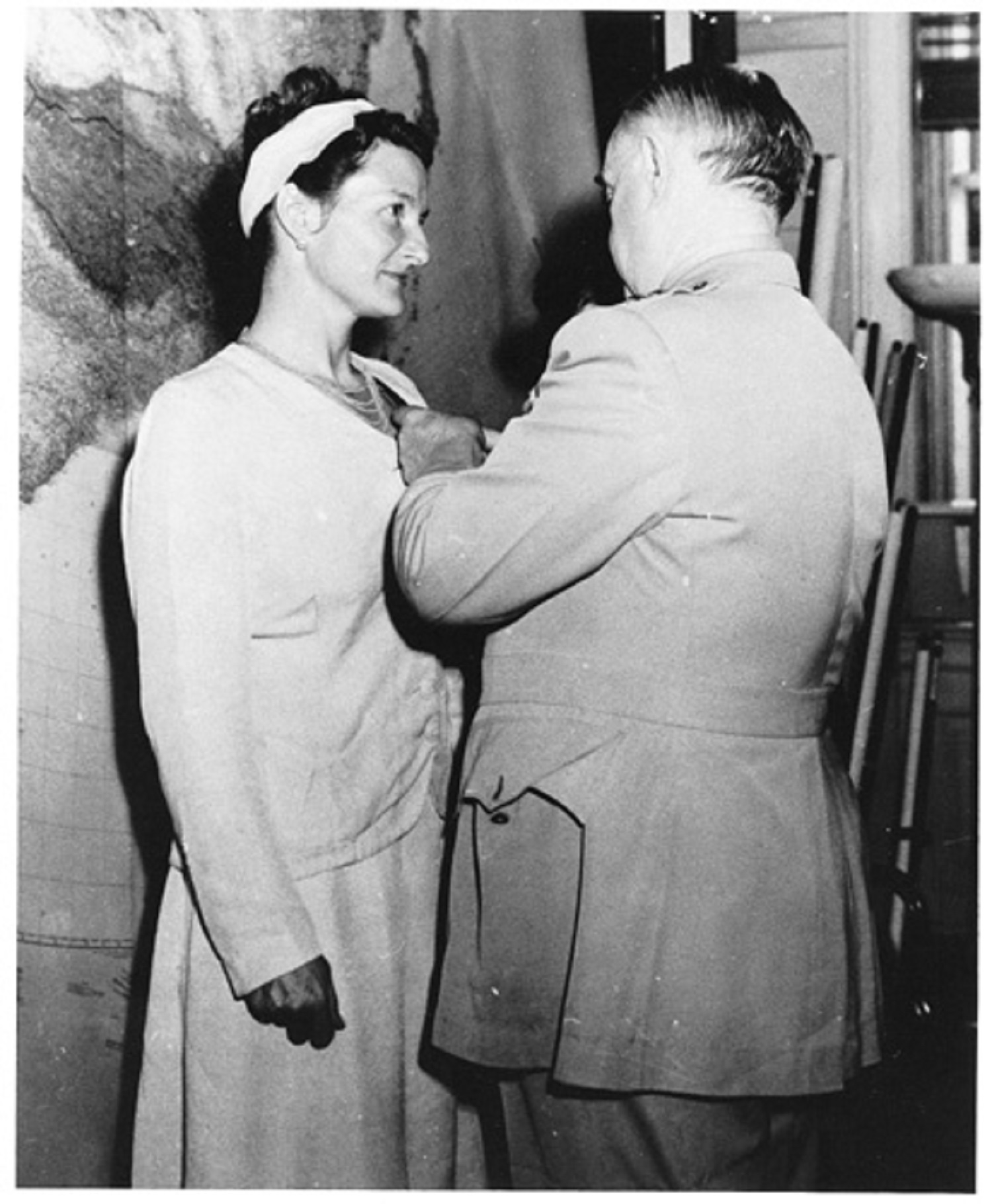
Hall receives the Distinguished
Service Cross
Virginia Hall was a spy for the U.S. and England during World War II. She conducted undercover operations that assisted the resistance in France and she aided in sabotage missions near the end of the war. She is known for being brave, resilient and intelligent. Despite her gender and a significant disability, she never walked away from her chosen profession.

Virginia Hall was born on April 6, 1906 in Baltimore, Maryland. She was the youngest daughter of theater owner Edwin Lee Hall and his wife, Barbara. Virginia’s early life was rather typical of a child of relatively wealthy parents. She attended Roland Park Country School and then decided that she wanted to study language in college. She first attended Radcliffe College. She went on to enroll in Bernard College and took classes there from 1924 to 1926. She became fluent in German, French and Italian.

Virginia Hall got her first government job in 1931. She went to Warsaw, Poland to work as a clerk at the American Embassy. While working in this capacity, she traveled to Tallin, Estonia, Vienna, Austria and Izmir, Turkey. Virginia was hunting in Turkey when she accidentally dropped her shotgun, which discharged into her foot. By the time medical help arrived, the wound was gangrenous. Her leg was amputated, and she was fitted with a wooden one.

Virginia Hall did not want to give up her work with the government, but the State Department had a policy that did not allow them to employ people with amputated limbs. She resigned in May of 1939. She went to work in France with the French Ambulance Service Unit. She had to leave the country when the Nazis invaded in May of 1940. She went from France to England, where she began working as a clerk at the embassy there.

While Virginia Hall was working in England, she was recruited for the Special Operations Executive. The SOE was a British group designed to infiltrate countries that were under the control of the Nazis and conduct spy operations, among other things, from the inside. The SOE sent her back to France. There she pretended to be a reporter for the New York Post while staying in Vichy. What she was really doing was aiding the organization of French resistance movements. She later went to Lyons and stayed there until 1942 when the Nazis began searching for her.

From France, Virginia Hall traveled to Madrid, an arduous journey done largely on foot. This must have been quite a trying task for a woman with one leg. Once she got set up in Madrid, she resumed her work as a spy. This time, she posed as a Chicago Times reporter. She disliked being there and asked her superiors if she might return to France. They sent to her back to England instead where she received further training. At the close of her training, she was moved to the U.S. Office of Strategic Services.

The OSS sent Virginia Hall back to France. This time she operated out of Haute-Loire. The Nazis had not forgotten the “woman with a limp,” however, which perhaps the OSS should have anticipated. Hall had to outsmart the Gestapo to avoid getting caught. Nonetheless, she managed to assist the resistance in the area and be the first person to report the change in location of the German General Staff Headquarters from Lyons to Le Puy to the Allies. In August of 1944, she became part of a team controlling three battalions of French forces. They were charged with sabotaging enemy communications. Virginia Hall and her comrades were successful.

Following her brave efforts in France, the OSS' European Theater Commander, Colonel James R. Forgan, nominated Virginia Hall for the Distinguished Service Cross. She was awarded the medal in 1945. Six years later, at the age of 45, Virginia Hall enlisted in the CIA. She worked for the CIA until her retirement in 1966. She passed away in 1982 at the Shady Grove Adventist Hospital in Washington, D.C. She was buried in the Druid Ridge Cemetery in Pikesville, Maryland.

Wednesday, May 18, 2016

Pat Garrett: Wild West Sheriff

Pat Garrett
Pat Garrett is the legendary Wild West sheriff who killed Billy the Kid. There is a lot of controversy regarding whether or not Garrett truly was responsible and, if he was, if the killing was an act of cowardice. Nonetheless, this is what Pat Garrett is best known for and it is highly likely that he did kill Billy the Kid. Much of the derision regarding the death of Billy the Kid may have stemmed from the fact that the lanky lawman was known to have a surly demeanor and a sarcastic sense of humor. He was also known as a drunk, a gambler and a man who often embellished, if not outright lied.

Patrick Floyd Jarvis Garrett was born in Chambers County, Alabama, on June 5, 1850. His parents were John Lumpkin Garrett and Elizabeth Ann Jarvis. He had seven siblings. In 1853 the Garrett family acquired a plantation in Claiborne Parish, Louisiana. The family moved there when Pat was three years old. He spent the rest of his childhood there.

In 1867, Pat Garrett’s mother died followed by his father the next year. The estate of Pat’s deceased father was handled by his brother-in-law. The house and land were sold and there was nothing left to keep Pat and his siblings. So, Pat Garrett left Louisiana for Texas on January 25, 1869. He was eighteen years old.

He found a job in Texas as a cowpuncher and a buffalo herder, among other things. By 1877, he was working as a buffalo hunter with a young man named John Briscoe. One day, when the men were in camp, John got angry at Pat and chased him with an ax. Pat attempted to avoid the man, but was forced to shoot him. By all accounts, Pat was remorseful. He turned himself over to authorities and was not charged with murder.

The next year, Pat Garrett moved to Fort Sumner. There, he began working for a man named Pete Maxwell. He also met William H. Bonney there. William H. Bonney is one of the several aliases used by Billy the Kid. It is known that the two men were acquaintances, but there is debate over whether they were friends or not and if they were, how close they were. Not long after they met, Billy and his gang became some of the most notorious men in the Wild West.

In 1880, Pat Garrett moved to Roswell, New Mexico and ran for sheriff there. He was twenty-nine years old. That same year he married his wife, Apolinaria, with whom he would have nine children. He became the sheriff of Roswell on November 2, 1880 and began searching for Billy the Kid shortly thereafter. He managed to capture Billy and two of his gang members in December, but after spending a few months in jail, Billy escaped.

Pat Garrett quickly arranged for the help of Pete Maxwell, who supposedly agreed to lure Billy to his home. When Billy arrived at the house on July 14, 1881, Pat reportedly shot him twice from the shadows when he opened the door to the darkened room in which Pat had waited for him. Opinions varied as to whether Pat should have fought Billy face to face or if he was a hero for killing the outlaw when he had the chance. Regardless of if it was brave or cowardly, the deed would follow Garrett for the rest of his life.

Pat didn’t return as the sheriff of Lincoln County after that term. In 1896, he went to Dona Ana County to serve as sheriff there. A politician and his son had been murdered and it was thought that the famous Pat Garrett could help solve the case. He was unable to help and the case remains unsolved. He never ran for sheriff anywhere again.

In 1901, Garrett went up for a job as customs collector in El Paso. President Roosevelt caught wind that Pat was a drunk and a gambler. However, Theodore Roosevelt himself recommended him for the position and he got the job on January 6, 1902. After a series of mishaps and possible deceptions, Roosevelt decided not to reappoint Garrett for another term. After the loss of this job, Garrett decided to go stay at his ranch in the San Andreas Mountains.

Soon after Pat returned to his ranch, he was forced to rent it out to a man named Wayne Brazel so that he could afford his mortgage. The men disagreed on what kind of livestock should be kept at the ranch and so Garrett found two other men to rent the property. Brazel refused to leave and so Pat went out to talk to him on February 28, 1908, with the two other men. An argument ensued, during which, Pat turned his back on two of the other men and was shot twice. His wounds were fatal.

Brazel confessed to the murder of Pat Garrett, but was later let off as it was deemed self defense. What exactly happened that day is still unclear and may never be known. Pat Garrett’s final resting place is in the Odd Fellow Cemetery in Los Cruces, New Mexico.

Sources

Perez, Antonio & Villalobos, Angel & Miranda. Jeremiah J., Pat Garrett Enjoyed Controversy, retrieved 10/9/09, epcc.edu/nwlibrary/borderlands/20_garrett.htm

The Alleged Killer of Billy the Kid, retrieved 10/9/09, angelfire.com/mi2/billy

Tuesday, May 3, 2016

William Chester Minor: Dictionary Contributor, Surgeon and Mental Patient


William Chester Minor was a surgeon who contributed to the Oxford English Dictionary. He was also severely mentally ill. He is remembered for the latter, but his contributions to the Oxford English Dictionary were significant, particularly given that he made those contributions from his room in an insane asylum.

William Chester Minor was born in June of 1834. He was born on the island that is currently Sri Lanka. He was one of two children that were born to a pair of Congregationalist Church Missionaries from New England. W.C.’s mother died of consumption when he was three years old. His father eventually remarried, a union which gave William at least one stepsibling–a brother. When he was fourteen years old, W.C.’s father sent him to New Haven, CT, where he moved in with his uncle and began attending Yale University.

William Chester Minor studied to be a surgeon at the prestigious school and graduated in 1863. He used his skill to become a surgeon in the Union Army during the Civil War. It is sometimes thought that his experiences during the war contributed to his mental illness. Whether or not this is true is a matter of debate. However, the symptoms of his disease were first noticed shortly after the war had ended.

Following the conclusion of the Civil War, William Chester Minor was stationed in New York City. Apparently, he developed an affinity for prostitutes while there. The Army did not consider this appropriate behavior, so they transferred him to a post in Florida. His behavior became even stranger (or more obvious) when he got there. He suffered paranoid delusions of persecution from other members of the military. The year after his arrival at his new post, he was taken to St. Elizabeth's Hospital in Washington, D.C.

It took the staff of the hospital roughly a year and a half to decide that William Chester Minor was not going to get better anytime soon. In 1871, he was allowed to leave the hospital and the military. He was given retirement pay. Soon after he was discharged, he made his way to London. William’s paranoid delusions became a big problem for him there. At one point, he made a complaint at Scotland Yard that someone was breaking into his room and attempting to poison him at night. His complaint was dismissed because W.C. was obviously a madman.

On February 17, 1872, Minor shot and killed a man named George Merrett. At the time of his death, George had six children and one on the way. He was on his way to work when William murdered him. William was arrested on the spot. He told the police that he had mistaken George for the man who had been entering his room at night. A jury found William not guilty by reason of insanity.

William Chester Minor was taken to the Broadmoor insane asylum on April 17, 1872. He was placed in a nice area of the hospital because he was not seen as dangerous. He was also given the privilege of purchasing books with his retirement pension. He took advantage of the privilege and built up a small library for himself. It was this small library that led to his work on the Oxford English Dictionary.

The makers of the Oxford English Dictionary sought volunteers to help them gather instances of word usages and the like for use in the famous dictionary. William Chester Minor somehow heard of this and volunteered. He meticulously collected word usages from his books and sent them into the editors of the dictionary. Quite a lot of what he collected was used in the making of the dictionary. Unfortunately, despite this productive spell, W.C.’s delusions continued. In fact, they grew ever more grandiose.

The delusions of nighttime attacks continued and they gradually became not only threatening, but sexual in nature. William Chester Minor began complaining that men were sneaking into his room at night and raping him. Sometimes more than one man was present during these imagined attacks. Eventually he began to include women and even children in his delusions. He was never the attacker or a willing participant in these acts. He always explained them as forced and unpleasant.

The delusions got the better of him in time, and on December 3, 1902, he cut off his penis. William Chester Minor’s horrific act of self-mutilation did not stop the paranoia that he suffered or the imagined nightly sexual attacks. At the age of 68 and lacking a penis, the man continued to believe that he was being sexually assaulted.

Eight years after the incident, Minor was given into the custody of his stepbrother so that he could be taken back to St. Elizabeth’s. The date was April 15, 1910. He stayed there for nine years and was diagnosed with schizophrenia during that time. He was moved to the Retreat for the Elderly Insane in New Haven, CT in 1919, so that he may be closer to his family in his old age. He died there on March 26, 1920.

Monday, April 25, 2016

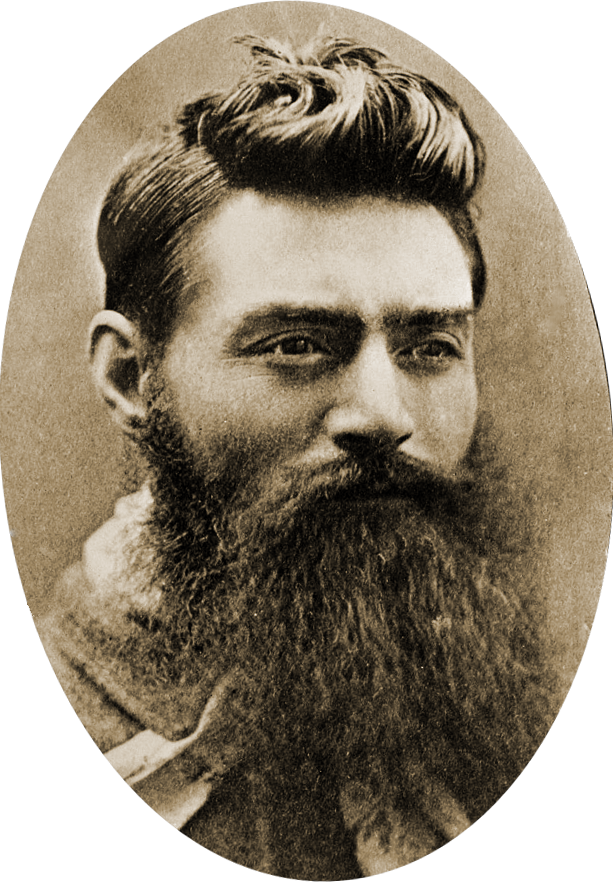
Ned Kelly: Australia's Most Memorable Outlaw


Edward (Ned)Kelly is the most infamous outlaw in Australian history. He was the leader of a four-man revolt against the colonial police in Victoria during the 1870's. Ned had two reputations. On one side he was a hero that stood up for the rights of his family and friends. On the other he was a horrible villain that would stop at nothing to get what he wanted. Either way you look at it, Ned Kelly led a very adventurous life. The question is whether it was a life he chose or was it a life he was forced into.

Ned Kelly was born in Victoria, Australia in 1855. He was the first-born son of John (Red) Kelly and Ellen Kelly. Ned’s was a humble family, and his father was not popular with law enforcement. Red had been in some trouble before he moved to Australia from Ireland and he wasn’t having much luck in his new home either. He passed away when Ned was only eleven, but it seems his unlawful lifestyle rubbed off on his eldest son.

After Red died, Ellen was left alone with eight children to feed and clothe. She moved the family to Eleven Mile Creek. Not long after the move, Ned and some of the other men in his family began getting themselves into trouble. Ned was arrested several times before he was even fifteen, but the charges were always dropped. Ned Kelly fans believe this was because the police were persecuting him for no apparent reason other than that he was Irish. Eventually his luck ran out and he was sentenced to six months in prison when he was fifteen.

Less than a year after Ned was released, he was arrested for stealing a horse. He denied stealing the horse and told the police that he was watching it for a friend. The friend was likely the man who stole the horse. Ned fought with the policeman who arrested him and allegedly embarrassed the man in the street. This probably didn’t help his case much. He was sentenced to three years in prison.  He was only sixteen at the time.

Ned Kelly returned home from prison when he was nineteen and led a quiet life for a short time. Soon after, his mother remarried and Ned supposedly began stealing horses with his stepfather. This is most likely true. Many members of the Kelly family had been arrested for stealing horses by that time. It was not an uncommon practice then. Money was tight and relations between common people and the government were strained.

Nearly three years after his release, Ned was accused of shooting a police officer. The officer, whose name was Fitzpatrick, reported that he had been at Ellen Kelly’s house and that Ned had shot him in the hand. The only other witnesses to his accident were the Kellys. They told authorities that Ned Kelly was not even home at the time. They also said that the man had been hurt in an altercation had taken place because he was being inappropriate with Ned’s sister. Neither story has been authenticated, but Fitzpatrick was later released from the force for being untrustworthy in an unrelated incident.

Ned was forced into hiding with his younger brother Dan, who was also implicated in the supposed shooting. While in hiding, Ned and Dan were joined by their two good friends, Joe Byrne and Steve Hart. The four stayed in hiding in the Australian bush and were rather successful at evading authorities for some time. During this time, Mrs. Kelly had been sentenced to three years in prison for her involvement in the Fitzpatrick incident. This lent fuel to the fire that was Ned’s hatred of the law.

It wasn’t until a few months later that the men had their first run in with the police. Four policemen had set up camp near Stringybark Creek while in search of Ned’s gang. Unbeknownst to the police, Ned Kelly and his men were camped nearby and were aware of their presence. When two of the policemen left to patrol the area Ned Kelly’s gang ambushed the camp. One man was shot dead and the other surrendered. The two men who were out patrolling then returned and refused to surrender to Ned. When they opened fire on Ned and his gang, the gang returned fire. Both men wound up dead. During the melee, the officer that had surrendered managed to escape and alert officials.

In November of 1878, Ned and his gang were officially outlawed and a hefty reward was offered for each of them, dead or alive. This did not deter the group in the slightest. The very next month, they robbed the National Bank in Euroa. In February of 1879, Ned Kelly’s gang robbed the Bank of New South Wales. This time, they were dressed as policemen. During the second robbery, Ned gave a letter to a man that was meant to be delivered to the authorities. In it was his side of the story. It later became known as the Jerilderie letter.

Following the robberies, the reward offered for the members of the Ned Kelly gang increased. The new reward was reportedly the highest reward ever offered for a criminal in Australia at the time. The new reward was so high in fact that one of Joe Byrnes’ childhood friends made a deal with the police for the reward. Joe heard of his treachery and shot him down at his front door while four policemen cowered inside the man’s house.

Immediately after the killing, Ned Kelly and his gang removed to a hotel in Glenrowan. They kept around sixty hostages inside. The gang had heard of a train filled with lawmen that was on its way to Glenrowan. They had seen to it that a length of track was dug up so that the train would derail. The plan was to wait it out at the hotel, but Ned had made a fatal mistake. He had allowed a schoolteacher, by the name of Thomas Curnow, leave the hotel with his family. The man immediately signaled the train and all was lost. The police arrived at the hotel that evening and surrounded it.

The Ned Kelly gang was as prepared for such an attack as they could be. They had constructed heavy bulletproof armor and each man had his own set with some variations. This was rather ingenious work at the time and the police were stumped by it. The men went out into the night wearing these suits, but they were very heavy and left their legs and arms exposed. Both Ned and Steve were shot, but neither was seriously injured.

Dan Kelly, Joe Byrne and Steve Hart retreated into the hotel while Ned Kelly went off into the bush, undetected by the police. The police continued to shoot into the hotel throughout the night. Nonetheless, many hostages were able to escape. Two hostages were shot and killed by the police and Joe Byrne was supposedly shot and killed while standing at the bar having a drink.

Early in the morning, Ned came out of the bush, still wearing his formidable armor. The police were only able to take him down by shooting him in the legs. Early that afternoon the police set fire to the hotel. When they went into the hotel later, they found Dan and Steve dead inside. Reports vary greatly as to the cause of these young men’s deaths. Some say they poisoned themselves while the hotel burned. There is no way to be sure what really happened, as there was no official investigation.

Ned Kelly survived the battle and was subsequently put on trial. He was tried for the murder of Thomas Lonigan at Stringybark Creek and found guilty. His was sentenced to hang. This sentence was carried out on November 11, 1880. Ned Kelly was only 25 years old when he died. He may have been a criminal or he may have been a victim. Either way, he remains a heroic symbol of hope against tyranny to many Australians to this day.

Sources

Kelly, Edward (Ned) (1855-1880), retrieved 7/11/09, adb.online.edu.au/biogs/A050009b.htm?hilite=ned;kelly

Wednesday, March 23, 2016

William Franklin: Loyalist Son of Benjamin Franklin


William Franklin was the last Royal Governor of New Jersey. He was also the illegitimate son of famous statesman and inventor, Benjamin Franklin. He spent most of his life under the watchful eye of his caring father. However, he and Benjamin parted ways when William remained loyal to the crown while his father became one of the most active participants in the political side the American Revolution.

William Franklin was presumably born in 1730. No one is quite sure who is mother was, but Benjamin and his common-law wife, Deborah Reed, raised him. Deborah Reed was made Benjamin Franklin’s common-law wife in September of 1730. There is some speculation that William was actually her son, but that Benjamin wanted to spare Deborah the embarrassment of having mothered a child out of wedlock. There is also the possibility that William was the son of one of Ben’s servants or a prostitute. His father was known to have had relations with these types of women.

His father cared for William as if he were a legitimate son, which seems normal enough now, but wasn't necessary then. There is no reason to believe that William was treated any differently when Deborah gave birth to a son in 1732, either. William’s younger brother died of smallpox in 1736. In 1742 William became an older brother again when his sister Sarah was born. There have been rumors that Deborah treated her husband’s son with contempt, but this may not have been true. Either way, there appear to have been few problems in the Franklin household with regard to the young man.

William grew up in a home where it was commonplace for brilliant men to come and meet with his father and discuss all sorts of interesting topics. Without a doubt, William Franklin spent his childhood immersed in the issues of the day and surrounded by the ideas and philosophies of great men. He spent a lot of time with his father and was quite like him, in many ways. In fact, when William was fifteen-years-old, he tried to run away and go out to sea. His father had done the very same thing. He also managed to stop William, but there was no keeping the boy from having an adventure.

In June of his fifteenth year, William Franklin joined the military. He spent roughly two years in the military and even became a captain. He subsequently spent more time on a brief expedition before coming home and leading a very social life before settling into more responsible roles. William Franklin was like his father in that he liked to run in groups of like-minded and forward-thinking men. He became a mason, like his father. He also was a member of New Junto and the American Philosophical Society.

At the age of 24, William Franklin became engaged to the seventeen-year-old daughter of Doctor Thomas Graeme. Her name was Elizabeth. Not long after their engagement, Benjamin asked his son to accompany him to England while he was on business there. He told William that he would fund his education in law if he did. William accepted. Benjamin also named him his heir when the decision was made for him to come. That would change later in their lives, when the close pair became estranged.

While in England, William studied law and became more involved in politics while meeting his father’s contemporaries there. He maintained correspondence with his fiancé for a while, but the love seems to have fizzled out for him in the six years that they were apart because on September 4, 1762, William married a woman named Elizabeth Downes. Not before he was presented with an illegitimate son of his own, however. The boy’s name was William Temple Franklin. His father left him in England when he was sworn in as Governor of New Jersey in 1962 and sent back to America. His son would not come to America until 1775 and the two were never close in the way Benjamin and William had been.

William Franklin was the Royal Governor of New Jersey during one of the most tumultuous times in American history. Colonial resistance to British rule peaked during his years in office. Because William remained loyal to the crown, he became a target for rebels. His father tried to convince him to change sides, but William felt a strong sense of loyalty and duty. It was admirable, really, but it destroyed his relationship with his father and caused William to be arrested and deposed in 1776. He was allowed to stay in private homes under the stipulation that he could not leave town and he could not contact any other loyalists. He broke those rules in June of 1776 and was officially jailed. He was not freed until October of 1778. His wife had died while he was incarcerated.

William returned to England in the early 1780's. He hadn’t spoken to his once beloved father in more than five years. His father had once overseen his career and gave him positions as a postmaster in Philadelphia and later the comptroller of the North American Postal System when William was in his twenties. Benjamin had helped his son to become a politician by funding his schooling and introducing him to all the right people. William had even been with his father during the famous ‘kite experiment’ and is thought to have been holding the kite. However, none of these memories of fondness were enough to reunite father and son. Benjamin and William Franklin saw each other briefly one last time in 1885. By the time Benjamin died, he had removed William as his primary heir.

William Franklin died in 1813, after having remarried and losing a second wife. He never did return to America and if he ever knew whom his real mother was, his secret died with him.

Sources

William Franklin: New Jersey’s Last Royal Governor, retrieved 3/7/10, njstatelib.org/NJ_Information/Digital_Collections/Revolution/WFranklin.pdf

William Franklin and Elizabeth Graeme, retrieved 3/7/10, ushistory.org/graeme/people/franklin_fergusson.htm

Sunday, March 13, 2016

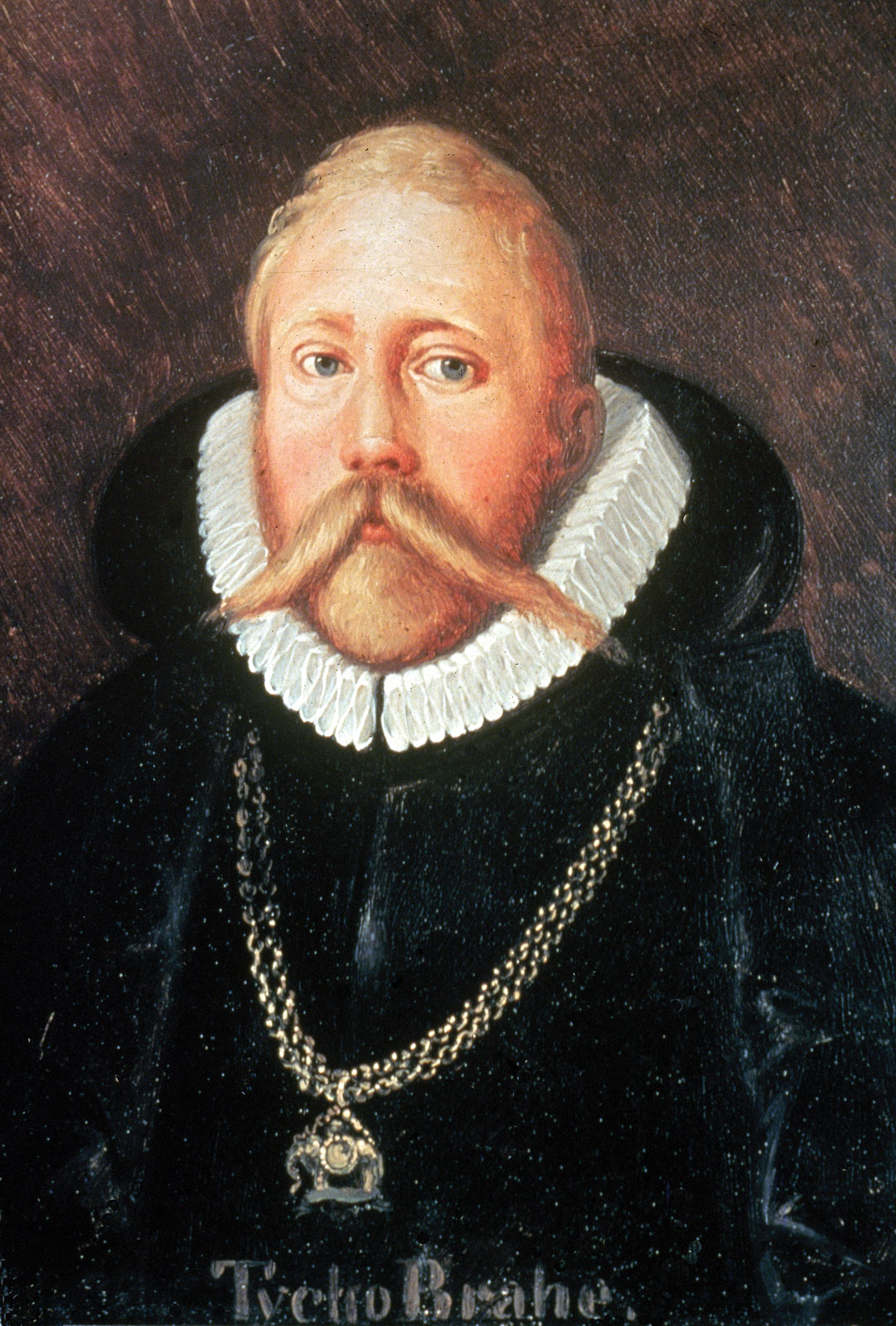
Tycho Brahe: A Brilliant Astronomer Who Died From Holding His Pee

Tycho Brahe studied the stars
with the help of his epic mustache
Tycho Brahe was a Danish astronomer that spent his life developing new tools for his trade and disproving the calculations of famed astronomers who came before him. He also botched a few calculations of his own. He spent most of his life studying astronomy and building a reputation as a skilled mathematician. He was also rumored to be a heavy drinker and a man who threw really crazy parties.

Tycho Brahe was born into a noble Danish family in 1546. He was one of a set of twins, but his twin died during infancy. When he was very young, his uncle Jorgen took Tycho to live with he and his wife. The reason for this is unknown and difficult to discern. Both of his parents were alive and they were very wealthy. It seems strange that they would just hand their eldest son over, but that is what they did. Tycho resided in Tostrup Castle with his aunt and uncle until he was six years old. At that time, the boy and his foster parents moved to Vordingborg Castle.

While living in Vordingsburg Castle, Tycho Brahe attended a local school. At the age of twelve, he began attending the University of Copenhagen, where he studied law and developed his love of astronomy. He graduated from the University of Copenhagen in 1562 and left Denmark to travel in Germany.While in Germany, Tycho studied at various universities, including, Leipzig, Rostock and Wittenberg. During his school years, Tycho Brahe began studying astronomy in earnest. Before he was even seventeen years old, he had predicted the conjunction of Saturn and Jupiter with more accuracy than both Ptolemy and Copernicus.

In 1565 Tycho Brahe’s living situation changed when his uncle died and his parents decided to assume responsibility for their son again. Nonetheless, Tycho continued his schooling. In 1566, while at Rostock, Tycho got into a duel with a classmate. A portion of his nose was lost in the fight. He had a prosthetic made the following year. He wore one from then on.

Tycho Brahe fell in love with a commoner by the name of Kirsten Jorgensdatter in 1572. The couple could not marry because of Kirsten’s lack of noble blood. However, Tycho had her come live with him. They eventually had six surviving children together. Unfortunately, none of them were able to inherit any of Brahe’s property, despite his protestations, because they were illegitimate.

Four years after Tycho Brahe met Kirsten Jorgensdatter, King Frederick II offered Tycho a fief on Hven Island and he took it. Brahe built an observatory there, which he named Uraniborg. He developed many tools for his craft and made many brilliant observations over the course of his career. He also published various accounts, catalogs and theories. He built a second observatory adjacent to Uraniborg in 1584as he had run out of room for his tools.

Tycho Brahe left Denmark and moved to a location near Prague when he was given a position as the Imperial Mathematician by Emperor Rudolph III. Johannes Kepler became his assistant there the following year. Tycho died not long after his appointment. He got uraemia as a result of holding his urine too long at the dinner table after drinking a great deal in 1601.

Sources

Tycho Brahe, retrieved 12/6/09, hps.com.ac.uk/starry/tycho.html

O’Connor, J.J & Robertson, E.F., Tycho Brahe, retrieved 12/6/09, gap_system.org/~history/Biographies/Brahe.html